

How to choose steel canteen furniture that lasts
Steel grade, frame build, seating style and layout: what to check before buying dining tables for a factory, hospital or college canteen.
By Lakshmi Steels Team3 min read
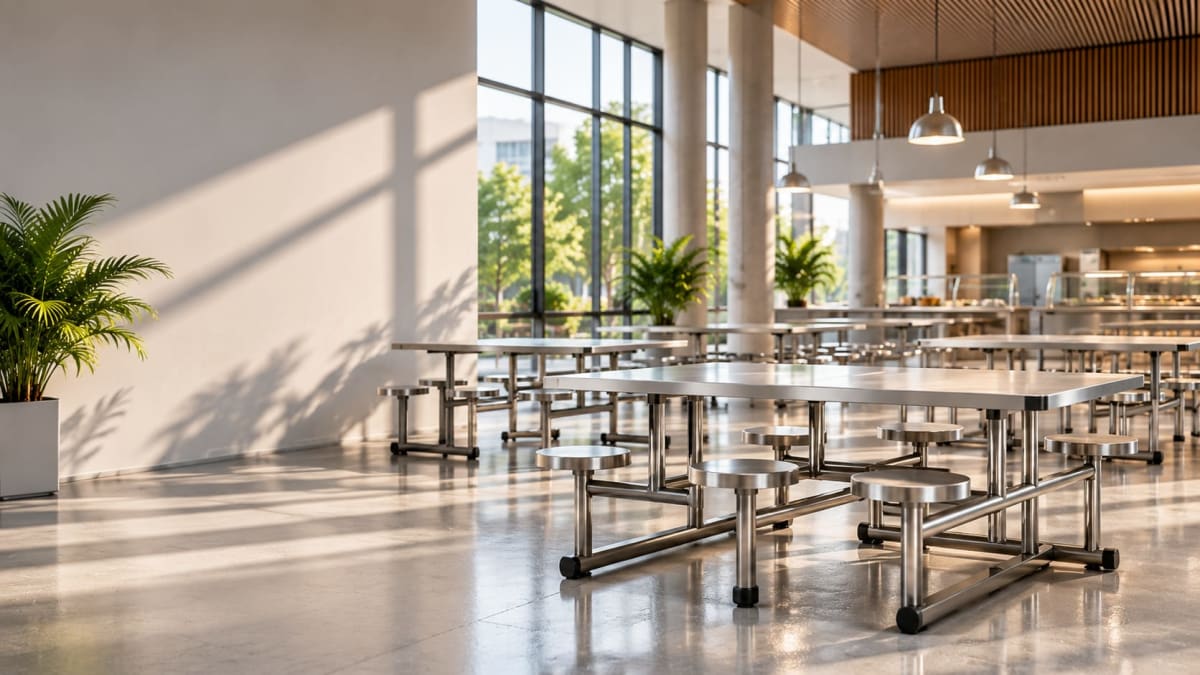
A canteen is the hardest-working room in any factory, hospital or college. Tables are wiped down with strong detergents several times a day, stools are dragged and stacked, and the furniture has to look presentable through years of rush-hour use. Wood swells and laminate chips; well-built steel simply keeps going. Here is what to check before you place an order.
1. Choose the right grade of stainless steel for the tabletop
The tabletop takes the most punishment: hot plates, spilled curries, water and cleaning chemicals. For food-contact surfaces, SS 304 is the grade to ask for. It resists rust and staining far better than the cheaper SS 202, which can develop spots and discoloration when it is cleaned with harsh detergents every day.
Also check the sheet thickness and how the edges are finished. A folded, rounded edge is stronger, safer for diners and easier to wipe than a sharp, cut edge.
2. Look closely at the frame
The frame decides how long the table stays level and rattle-free. For heavy daily use, look for:
- Thick-walled steel tubes rather than thin, lightweight sections
- Continuous, ground-smooth welds at every joint, not spot welds
- Cross-bracing between the legs so the table doesn't wobble when someone leans on it
- Adjustable or non-marking feet that protect the floor and cope with uneven surfaces
Mild-steel frames should be powder coated after a proper pre-treatment (degreasing, de-rusting and phosphating). This is what stops rust creeping in where the coating is scratched.
3. Fixed seating or separate chairs?
Tables with attached swing-out stools are the most popular choice for factory and hostel canteens. The seats can't be dragged away or stacked carelessly, the floor underneath is easy to mop, and the hall always looks tidy. Separate steel chairs suit staff cafeterias and hospital dining rooms, where people need to pull up a chair for a wheelchair user or a visitor.
4. Plan the layout before you count tables
Measure the hall first, then work out how many people you need to seat in one shift. As a rule of thumb:
| Layout | Seats | Typical use |
|---|---|---|
| 4-seater with attached stools | 4 | Smaller canteens, staff rooms |
| 6-seater with attached stools | 6 | Factory and hostel dining halls |
| 8-seater long table | 8 | Large institutional dining halls |
Allow roughly 600 mm of table length per person, and keep the main walkways at least 900 mm wide (wider near the serving counter, where queues form).
5. Think about cleaning and maintenance
Canteen furniture is cleaned more often than any other furniture you own. Open frames with few hidden corners are quicker to wipe and harder for dirt to collect in. Avoid gaps where food can get trapped between the top and the frame. For daily care, mild soap and warm water are all stainless steel needs; avoid steel wool and bleach, which can scratch or mark the surface.
The cheapest table to buy is rarely the cheapest to own. A well-built steel table that lasts ten years costs far less than replacing a cheaper one every two or three.
A quick checklist before you order
- SS 304 tabletop with folded, rounded edges
- Thick-walled frame with continuous welds and cross-bracing
- Powder coating over a proper pre-treatment on any mild-steel parts
- Seating style that suits how the room is used
- A layout drawn to scale, with room for walkways and queues
Our commercial steel dining tables are built in our Coimbatore factory to these standards, and we can fabricate sizes to fit your hall. Browse our institutional furniture or contact us with your hall dimensions for a layout suggestion and a factory quote.
Found this useful?